Bitcoin and Ethereum are two of the most recognised names in the cryptocurrency market. They are often compared because they have large ecosystems, active communities and significant market value. However, treating them as direct competitors misses an important point: they were designed to solve different problems.
Bitcoin was created as a peer-to-peer electronic payment system that allows people to transfer value without relying on a traditional financial intermediary. Ethereum expanded the possibilities of blockchain technology by introducing a programmable network where developers can build applications using smart contracts.
Both networks use cryptography, distributed records and independent participants to maintain their systems. But their approaches to security, monetary supply, transaction processing and practical use are different.
Understanding these differences is more useful than comparing their market prices alone.
What is Bitcoin designed to do?
Bitcoin was introduced in 2008 through a whitepaper published under the name Satoshi Nakamoto. Its network became operational in January 2009.
The original proposal described a peer-to-peer electronic cash system. Its purpose was to allow users to transfer digital value directly between themselves without requiring a financial institution to process every payment.
Bitcoin uses a public blockchain to record transactions. Participants can verify the history of funds and check whether a transaction follows the network’s rules.
One of Bitcoin’s defining characteristics is its monetary policy. The protocol limits the total supply to 21 million BTC, with new bitcoins entering circulation through block rewards paid to miners.
The reward is reduced approximately every four years through an event known as the halving. This gradually decreases the rate at which new bitcoins are issued.
Bitcoin’s design prioritises a relatively simple monetary system, predictable issuance and security through Proof of Work.
Although it can support certain additional functions, its main identity remains closely connected to digital payments and the transfer of value.
What is Ethereum designed to do?
Ethereum was proposed in 2013 and launched in 2015. Its purpose was to provide a blockchain platform capable of running more complex programmes than those typically associated with Bitcoin.
The central feature is the smart contract: software deployed on the blockchain that executes according to predefined instructions.
Developers can use these contracts to create applications for lending, trading, digital collectibles, games and other services.
Ethereum therefore functions as a programmable environment rather than simply a payment network.
Its native cryptocurrency, Ether (ETH), supports the operation of the system. Users pay transaction fees in ETH, while validators stake ETH to participate in network security.
Ethereum does not have a fixed maximum supply of 21 million units. Its supply changes according to issuance and fee-burning mechanisms defined by the protocol.
This reflects a different design philosophy from Bitcoin.
Bitcoin vs Ethereum: The main differences
The two networks share some fundamental principles, but their technical and economic models differ.
| Feature | Bitcoin | Ethereum |
|---|---|---|
| Launch | 2009 | 2015 |
| Main purpose | Peer-to-peer digital currency | Programmable blockchain platform |
| Native cryptocurrency | BTC | ETH |
| Consensus mechanism | Proof of Work | Proof of Stake |
| Maximum supply | 21 million BTC | No fixed maximum supply |
| New coin issuance | Block rewards, reduced through halvings | Validator issuance, affected by fee burning |
| Transaction fees | Based on transaction size and demand for block space | Based on computational resources and gas fees |
| Smart contracts | Limited scripting functionality | General-purpose smart contracts |
| Main applications | Payments and value transfer | DeFi, tokens, NFTs and decentralised applications |
| Network security | Mining and independent node verification | Staking, validators and independent node verification |
These differences are not merely technical details. They affect how each network is used and what users should consider before interacting with it.
Proof of Work vs Proof of Stake
One of the most important differences between Bitcoin and Ethereum is how they reach consensus.
A blockchain needs a mechanism that allows participants to agree on which transactions and blocks are valid. Bitcoin and Ethereum approach this challenge differently.
How Bitcoin uses Proof of Work
Bitcoin relies on miners who compete to produce new blocks.
Mining involves performing large numbers of calculations in an attempt to find a block hash that satisfies the network’s difficulty requirements.
The process requires specialised hardware and electricity. The first miner to find a valid result can broadcast the block, which is then checked by other network participants.
If the block follows the rules, it can be added to the blockchain.
Miners receive newly issued BTC through the block subsidy, along with the fees associated with the transactions included in the block.
The computational cost of mining makes it expensive for an attacker to rewrite established transaction history.
However, mining power is not distributed equally among all participants. The concentration of mining activity is one of the factors considered when evaluating Bitcoin’s security and decentralisation.
How Ethereum uses Proof of Stake
Ethereum changed from Proof of Work to Proof of Stake in September 2022.
Instead of competing through computational calculations, validators deposit ETH as collateral to participate in the consensus process.
Validators are selected to propose blocks and attest to their validity. The protocol applies penalties when participants behave dishonestly or fail to meet certain responsibilities.
This system reduces the need for energy-intensive mining while using economic incentives to support network security.
Proof of Stake and Proof of Work have different security assumptions and operational requirements. Neither should be judged solely by the amount of energy it consumes.
BTC and ETH: Two different monetary models
Bitcoin and Ethereum have different approaches to the supply of their native assets.
Bitcoin has a maximum supply of 21 million BTC. New bitcoins are introduced through block rewards, and the reward decreases through scheduled halvings.
This predictable issuance schedule is one of Bitcoin’s defining characteristics.
Ethereum follows a different model. ETH is issued to reward validators, while a portion of transaction fees is burned.
Depending on network activity and the amount of ETH issued, the total supply can increase or decrease over a given period.
The difference can be summarised as follows:
- BTC: A fixed maximum supply with a predictable issuance schedule.
- ETH: An issuance and burning system influenced by network rules and activity.
Neither model guarantees a particular market price.
The value of BTC and ETH depends on several factors, including demand, market conditions, investor expectations, liquidity, regulation and confidence in the networks.
A limited supply does not automatically mean that an asset will become more valuable. Demand still matters.
What can you actually do with Bitcoin?
Bitcoin is primarily used as a digital asset that can be transferred between users.
Some people use it to make payments where merchants accept it. Others hold it as a long-term asset or use it to transfer value across borders.
Bitcoin’s monetary policy and decentralised design have also led some investors to describe it as digital gold.
However, this comparison should be treated carefully. Bitcoin does not have the same history, legal status or established role as physical gold. Its market price can be highly volatile.
Bitcoin also has a developing ecosystem of additional technologies and services.
The Lightning Network, for example, is a Layer 2 payment network designed to enable faster and potentially cheaper Bitcoin payments by processing many transactions outside the main blockchain.
Other developments explore ways to extend Bitcoin’s functionality, although they do not change the network’s fundamental design priorities.
For many users, the main reasons to interact with Bitcoin remain relatively straightforward: buying, holding, receiving or sending BTC.
What can you actually do with Ethereum?
Ethereum supports a broader range of programmable applications.
Its smart contracts allow developers to build services that operate according to rules stored on the blockchain.
Some of the main use cases include:
Decentralised exchanges
Users can exchange tokens through smart contracts rather than relying entirely on a centralised exchange to match and settle every trade.
Lending and borrowing
DeFi protocols allow users to deposit digital assets, borrow against collateral or earn returns according to the rules of a particular application.
These activities carry risks, including liquidation, smart contract failures and changes in asset prices.
Stablecoins
Ethereum supports several stablecoins designed to track the value of traditional currencies, particularly the US dollar.
They can be used for transfers, trading and other blockchain-based financial activities.
NFTs and digital collectibles
Ethereum supports non-fungible tokens that can represent digital collectibles, membership rights or other types of digital assets.
Owning an NFT does not automatically grant copyright over the associated content.
Decentralised applications
Developers can create applications that use smart contracts to manage digital assets, access rights and other operations.
This broader functionality makes Ethereum more complex than Bitcoin from a user and developer perspective.
Which network has lower transaction fees?
There is no permanent answer. Transaction costs depend on network demand, transaction complexity and the conditions at the time of payment.
Bitcoin fees are generally determined by the transaction’s size in virtual bytes and the fee rate offered. Transactions that occupy more block space can cost more, regardless of the amount of BTC being transferred.
Ethereum fees depend on gas consumption and the applicable gas price. A simple transfer of ETH generally requires less computational work than interacting with a complex smart contract.
For example, sending ETH to another wallet may involve a relatively straightforward transaction. Using a DeFi application can require several contract operations and therefore consume more gas.
Both networks experience changes in fees when demand increases.
Users should also distinguish between the cost of using the main blockchain and the cost of using additional networks or services.
Layer 2 systems can reduce transaction costs, but they may introduce different security assumptions and additional steps when moving assets between networks.
Which network is faster?
Transaction speed is another area where direct comparisons can be misleading.
Bitcoin typically produces a new block approximately every ten minutes, although the actual time between blocks varies.
This does not mean that every Bitcoin payment takes exactly ten minutes. A transaction may appear in a wallet before it is confirmed, and its inclusion depends on factors such as network demand and the fee rate offered.
Ethereum’s mainnet operates with shorter block intervals. However, block production time is not the same as a guarantee that every transaction is final or safe to treat as irreversible.
Ethereum also uses Layer 2 networks to process transactions outside the main chain, potentially offering faster and cheaper user experiences.
The most appropriate comparison depends on what the user is trying to do. Sending a simple payment, trading tokens and interacting with a smart contract are different activities with different performance requirements.
Is Bitcoin safer than Ethereum?
Security is not a single measurement, and there is no simple answer that applies to every situation.
Bitcoin has a long operational history and a relatively narrow protocol design. Its security model is based on Proof of Work, economic incentives and independent verification by nodes.
Ethereum has a broader technical environment. Its smart contract functionality allows more complex applications, but this also introduces additional risks.
For example, a vulnerability in a DeFi contract can lead to the loss of funds even if the underlying Ethereum blockchain continues operating correctly.
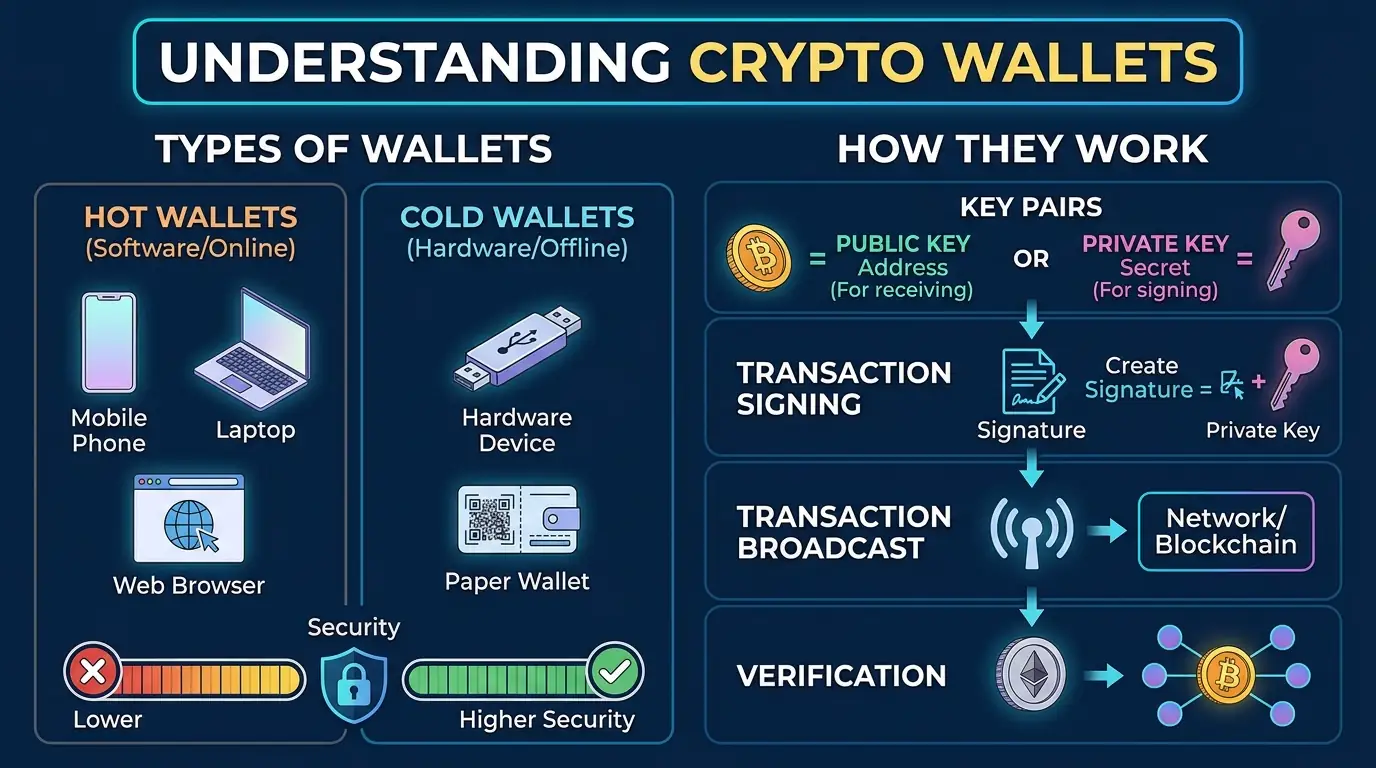
Both networks can be exposed to risks involving private keys, wallet security, exchanges, phishing attacks and malicious applications.
The distinction is between the security of the blockchain itself and the security of the services built around it.
A user can lose BTC or ETH through a compromised wallet or fraudulent platform without the underlying network having been hacked.
Can Bitcoin and Ethereum be used together?
Yes. Although they are separate networks, users can interact with both.
A person may hold BTC as a digital asset while using ETH to access decentralised applications.
There are also systems that attempt to make Bitcoin available within Ethereum-based applications through tokenised representations.
For example, a wrapped Bitcoin token can represent BTC on another blockchain, allowing users to interact with certain DeFi protocols.
However, wrapped assets introduce additional dependencies. Their value and redeemability depend on the mechanisms used to hold, transfer or represent the underlying Bitcoin.
They should not automatically be treated as identical to holding native BTC directly on the Bitcoin network.
Users should also pay attention to network compatibility when transferring assets. Sending a token through an unsupported network can result in funds becoming inaccessible.
Bitcoin vs Ethereum: Which one should you choose?
The answer depends on what you want to do.
If your main interest is a decentralised digital currency with a fixed maximum supply and a relatively focused purpose, Bitcoin is the network to study first.
If you want to explore smart contracts, decentralised finance, NFTs or blockchain-based applications, Ethereum offers a broader range of functionality.
This does not mean that one is automatically a better investment than the other.
Before acquiring either asset, consider:
- What role does the network play?
- How does its consensus mechanism work?
- What are the main risks?
- How are transaction fees calculated?
- How will you store and manage the asset?
- What happens if you lose access to your wallet?
- Are you buying the asset to use it or because you expect its price to rise?
These questions help separate an understanding of the technology from speculation about its market value.
Compare their purpose before comparing their prices
Bitcoin and Ethereum are both important blockchain networks, but their priorities are different.
Bitcoin focuses on maintaining a decentralised monetary system with a predictable maximum supply. Ethereum provides programmable infrastructure for applications that use smart contracts and digital assets.
BTC and ETH therefore serve different roles within their respective ecosystems.
Comparing their prices without understanding these differences offers very little information about how the networks work or why people use them. A more useful starting point is to examine their technology, economic models, applications and risks.
Sources
- Bitcoin: A Peer-to-Peer Electronic Cash System — Original Bitcoin whitepaper.
- Bitcoin Developer Guide — Documentation on Bitcoin transactions, mining and network operation.
- Ethereum.org: What Is Ethereum? — Overview of Ethereum’s purpose and ecosystem.
- Ethereum.org: Proof of Stake — Explanation of Ethereum’s consensus mechanism.
- Ethereum.org: Gas and Fees — Documentation on transaction fees and gas.
- Lightning Network — Information about Bitcoin’s Layer 2 payment network.