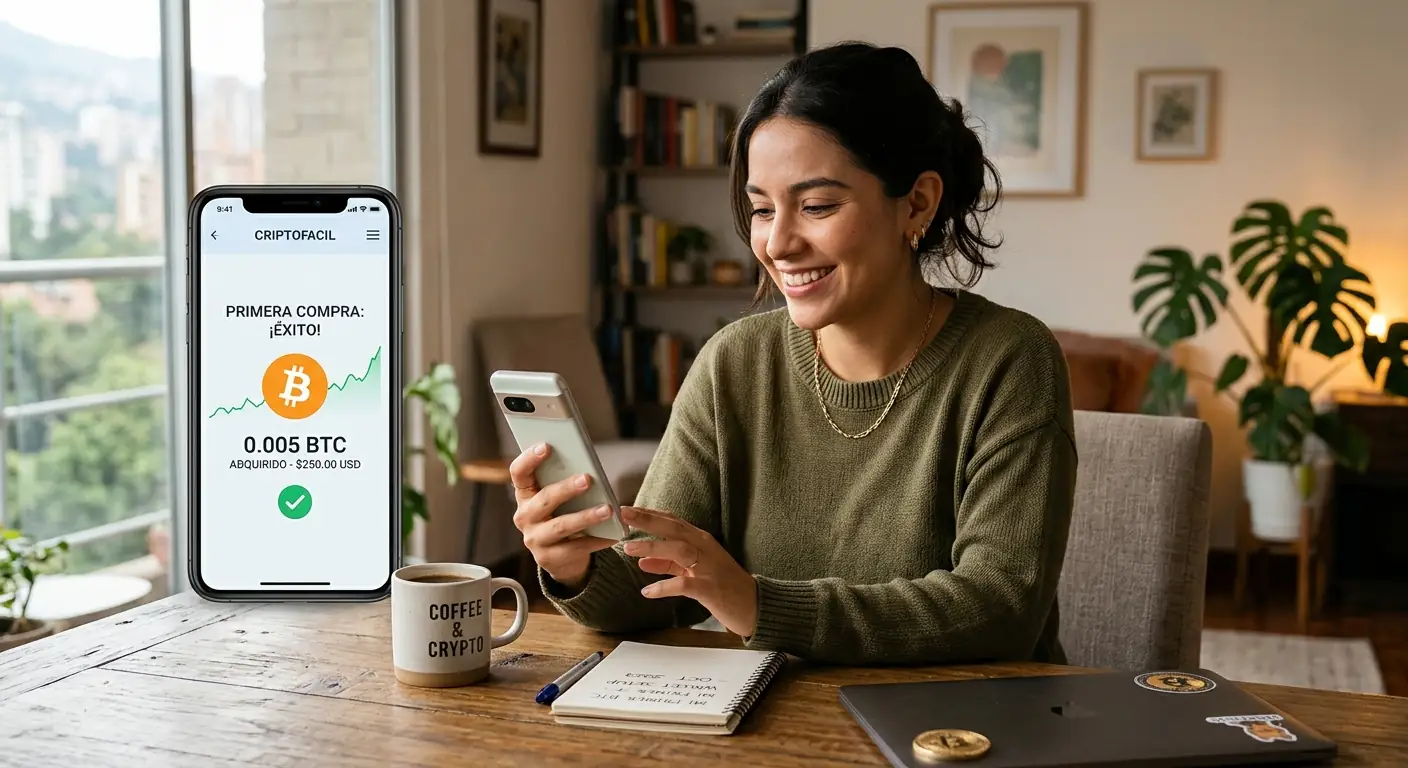
Buying cryptocurrency for the first time can look surprisingly simple. You create an account, choose a coin, enter an amount and press a button.
The transaction itself may take less than a minute. Understanding what you are buying, where your money is going and what happens afterwards takes more preparation.
A first purchase involves several decisions: choosing a platform, checking its costs, understanding the asset, deciding how much to spend and knowing who will control the cryptocurrency once the order is complete.
This guide walks through those decisions in the order you are likely to face them. The aim is not to recommend a particular coin or platform, but to help you avoid preventable mistakes before committing your money.
1. Decide Why You Want to Buy Cryptocurrency
Before opening an exchange account, identify what you expect to get from the purchase.
Are you interested in understanding how Bitcoin works? Do you want to hold Ethereum because you are interested in its network? Are you considering a small amount of cryptocurrency to learn how transactions work?
These are different objectives, and they may lead to different decisions.
Buying an asset because you understand its purpose is not the same as buying it because someone on social media claims its price will double.
A useful starting point is to write down three things:
- What cryptocurrency are you considering?
- Why does it interest you?
- How long do you expect to hold it?
You do not need a sophisticated investment thesis for a small educational purchase. You do need to understand that cryptocurrency prices can fall sharply and that you could lose all the money invested.
The UK’s Financial Conduct Authority makes this risk explicit in its guidance on investing in crypto. It also warns against investing money you cannot afford to lose.
2. Choose a Platform You Can Verify
Most beginners buy cryptocurrency through a centralised exchange or a crypto trading platform.
These services provide an interface where users can deposit traditional currency, place orders and, depending on the platform, withdraw their crypto to an external wallet.
Choosing one should involve more than comparing the number of available coins or looking for the lowest advertised fee.
Check who operates the service
Find the company’s legal name, registered location and the entity responsible for providing the service.
A familiar brand name does not always tell you which legal company handles your account. Large platforms may operate through different entities in different countries.
Check whether the provider is authorised or registered where required by the rules applicable to your location. In the European Union, for example, MiCA establishes a regulatory framework for crypto-asset service providers, with authorisation and transitional arrangements that can vary according to the circumstances and country.
Do not assume that a platform is authorised simply because it appears in an online advertisement or has thousands of users.
Read the withdrawal conditions
A platform may allow you to buy Bitcoin but impose conditions on withdrawing it to your own wallet.
Check:
- Whether external withdrawals are available.
- Which blockchain networks are supported.
- Whether withdrawal limits apply.
- What fees are charged.
- Whether additional identity checks are required.
Buying cryptocurrency and being able to move it freely are not necessarily the same thing.
Understand who controls your assets
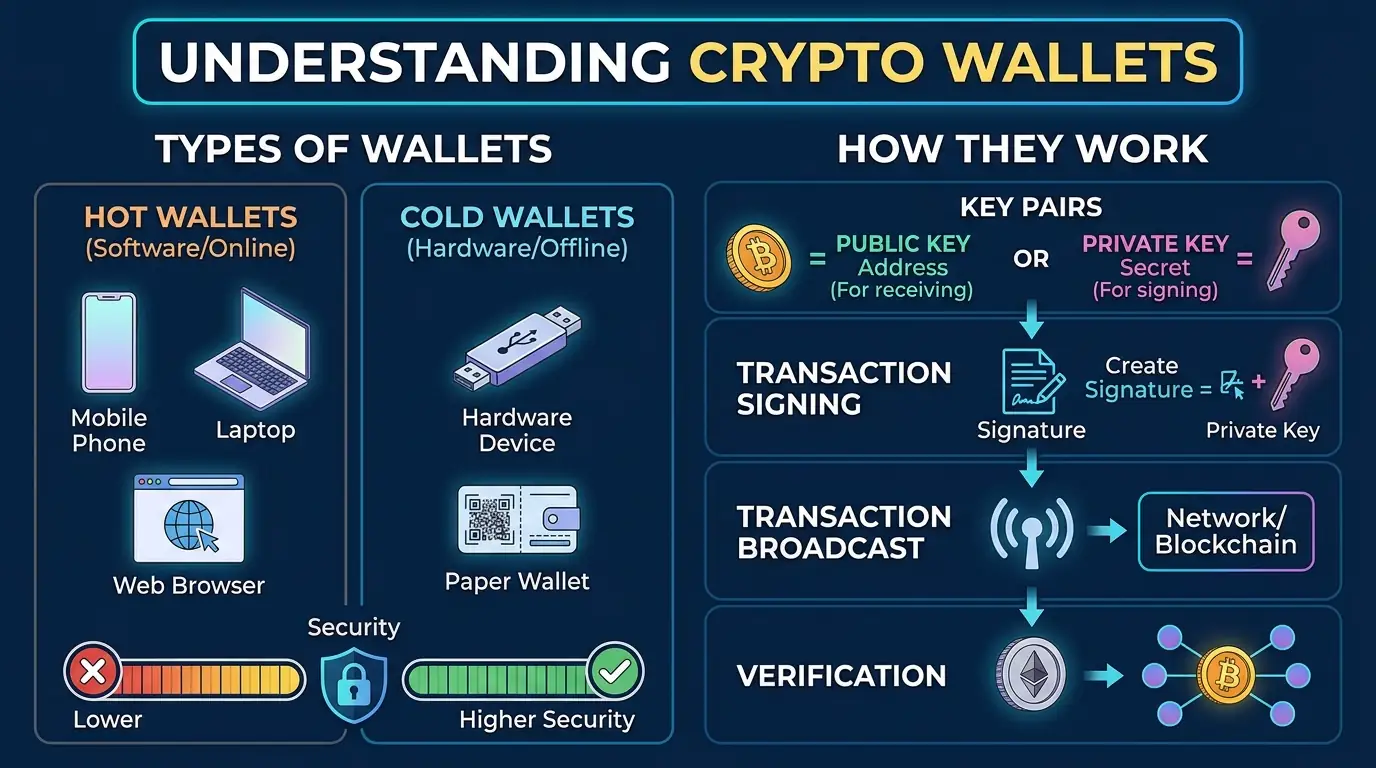
If the platform holds the private keys, it is providing a custodial service. You access your balance through your account, but the provider controls the keys used to manage the cryptocurrency.
This is different from using a non-custodial wallet, where you control the private keys yourself.
Custodial services can be convenient, particularly for beginners, but they introduce reliance on the provider. Problems such as insolvency, operational restrictions, cyberattacks or withdrawal suspensions may affect access to your funds.
The SEC’s Crypto Asset Custody Basics for Retail Investors explains the differences between self-custody and third-party custody, including the risks associated with each.
3. Understand the Cryptocurrency Before Buying It
A low price per coin does not mean an asset is cheap.
For example, one cryptocurrency might trade at $0.10 while another trades at $10,000. That difference alone tells you almost nothing about their relative value.
The total supply, circulating supply, market capitalisation, token distribution and demand all matter.
Before buying, investigate the following.
What does the project do? Understand the network or service behind the cryptocurrency. Is it designed for payments, smart contracts, governance, access to a service or something else?
What role does the token play? Some tokens are essential to the operation of a network. Others provide access to particular services or are mainly traded as speculative assets.
How is the supply managed? Check whether the maximum supply is fixed, whether new tokens are issued over time and whether a significant proportion is controlled by a small number of holders.
Is the project being used? Look beyond promotional claims. Examine available documentation, development activity and evidence of real network usage.
What could go wrong? Consider technical failures, security incidents, regulatory changes, competition and declining demand.
The Commodity Futures Trading Commission’s advisory on buying digital coins and tokens highlights factors such as adoption, liquidity, competing technologies and the possibility of theft.
If you cannot explain what you are buying in a few sentences, take more time before placing an order.
4. Set a Budget Before Looking at Prices
Decide how much money you are prepared to put at risk before entering the exchange.
This matters because cryptocurrency platforms make it easy to move from browsing to buying. Seeing a price rise can create pressure to increase the amount, while a sudden drop may tempt you to invest more to lower your average purchase price.
Neither decision should be automatic.
A sensible budget should not affect money needed for:
- Rent or mortgage payments.
- Food and essential bills.
- Existing debt repayments.
- Emergency savings.
- Planned expenses.
Also consider whether you could tolerate losing the entire amount.
For a first purchase, a small amount can be enough to understand how the process works. You can learn how orders are executed, how balances are displayed and how withdrawals work without committing a large sum.
There is no need to increase your investment simply because you have completed your first transaction.
5. Check Every Cost, Not Just the Advertised Fee
The amount you pay is not always the same as the amount you see on the price chart.
A crypto purchase can involve several costs:
Trading fee: The platform may charge a percentage or fixed amount for executing the order.
Spread: This is the difference between the buying price and the selling price available at a given moment. Some services incorporate part of their revenue into the quoted price rather than displaying a separate trading commission.
Deposit fee: Adding money to your account may involve a charge, depending on the payment method.
Payment provider fee: Your bank, card issuer or payment service may apply additional charges.
Withdrawal fee: Moving cryptocurrency out of the platform may involve a platform fee, a network fee or both.
For example, imagine you intend to spend $100 on Bitcoin. The platform advertises a low trading commission, but the quoted purchase price is less favourable than the price available elsewhere. Your effective cost may be higher than the headline fee suggests.
Before confirming, check the estimated amount of cryptocurrency you will receive and the total amount of money that will leave your account.
If the platform does not make these figures clear, do not rush the transaction.
6. Choose the Right Order Type
Once you have selected a cryptocurrency and entered the amount, the platform may ask what type of order you want to place.
Two common options are market orders and limit orders.
Market orders
A market order instructs the platform to execute the purchase at the best available prices in the market.
It prioritises execution over price certainty.
The final price may differ from the price displayed when you first opened the order screen. This can happen because prices move, available liquidity changes or the order is filled across several price levels.
The difference between the expected price and the actual execution price is known as slippage.
Limit orders
A limit order lets you specify the maximum price you are willing to pay.
For example, if Bitcoin is trading at $60,000 and you place a buy limit order at $58,000, the order will only execute at that price or a better one, subject to the platform’s execution rules.
However, there is no guarantee that the order will be filled. If the market never reaches your chosen price, the purchase may remain pending or expire.
The distinction is simple: a market order prioritises execution, while a limit order gives you more control over the price.
The Coinbase explanation of order types provides examples of how these orders work. Exact options and conditions vary between platforms.
7. Secure Your Account Before Depositing Money
Your exchange account is a potential target for attackers. Securing it should happen before you transfer funds.
Start with a unique password that you do not use for any other website.
Where available, enable multi-factor authentication. An authenticator application or a hardware security key generally offers stronger protection than relying only on SMS codes, although the options available depend on the service.
You should also:
- Verify the website address before signing in.
- Avoid accessing your account through links in unexpected emails or messages.
- Never share verification codes with anyone.
- Enable withdrawal confirmations or address allowlisting if the platform supports them.
- Check account activity and login notifications.
- Keep your email account protected, since it may be used to reset exchange access.
Be particularly cautious of people claiming to be customer support. A legitimate support representative should not need your password, private key or recovery phrase.
8. Decide Where Your Cryptocurrency Will Be Held
After buying, your cryptocurrency will be held either through the platform’s custody arrangements or in a wallet you control.
For a beginner, leaving a small balance on a reputable platform may be operationally simpler. However, this means relying on that provider to maintain access and process withdrawals.
Moving cryptocurrency to a personal wallet gives you direct control if it is non-custodial, but also makes you responsible for protecting the private keys and recovery phrase.
Before making a withdrawal, check that:
- The wallet supports the cryptocurrency.
- You have selected the correct blockchain network.
- The destination address is correct.
- Any required memo or tag has been included.
- You understand the withdrawal fee and minimum amount.
A transfer sent to an incompatible network or incorrect destination may be difficult or impossible to recover.
If you are moving funds for the first time, consider testing the process with a small amount before transferring a larger balance.
9. Understand What Happens After You Buy
A completed purchase does not mean that the investment has become risk-free.
The value of your cryptocurrency can change immediately after the transaction. You may also face risks that have nothing to do with its market price.
For example:
- The exchange may suspend withdrawals.
- The wallet you use may be compromised.
- The project may experience a security incident.
- The network may become congested.
- Regulatory or operational changes may affect access to the service.
Keep a record of your purchase, including the date, amount paid, cryptocurrency received, fees and transaction details.
This information can help you understand your actual purchase cost and may be important for tax reporting. Tax treatment depends on the country where you are tax resident and the rules applicable to your situation.
Do not rely exclusively on the balance displayed by an exchange. Keep your own records.
Your First Purchase: Final Checklist
Before pressing confirm, go through these questions.
- Do I understand what this cryptocurrency is and what it does?
- Have I checked the project’s main risks?
- Have I verified the platform’s legal entity and applicable regulatory status?
- Do I understand who controls the private keys?
- Can I afford to lose the amount I am spending?
- Have I checked the total cost, including fees and spread?
- Do I understand whether I am placing a market or limit order?
- Is my account protected with a unique password and multi-factor authentication?
- Do I know where the cryptocurrency will be held after the purchase?
- If I plan to withdraw it, have I checked the network, address and any required memo?
- Have I saved a record of the transaction?
If you cannot answer one of these questions, pause and find the information before continuing.
A First Purchase Should Be a Process, Not an Impulse
Buying cryptocurrency is technically straightforward. Making an informed decision is more demanding.
The first purchase is an opportunity to understand how a platform works, how fees affect the amount received and what responsibilities come with holding digital assets.
You do not need to buy immediately, follow a trending coin or invest a large amount to learn. Taking time to check the details is part of the process.
The most useful confirmation screen is not the one that appears after you press the button. It is the one you have already reviewed carefully before deciding to press it.
Sources
- Financial Conduct Authority – Investing in Crypto
- U.S. Securities and Exchange Commission – Crypto Asset-Related Investments
- U.S. Securities and Exchange Commission – Crypto Asset Custody Basics for Retail Investors
- Commodity Futures Trading Commission – Customer Advisory: Use Caution When Buying Digital Coins or Tokens
- Coinbase Help – Understanding the Order Types
- Canadian Securities Administrators – Buying and Selling Crypto Assets
- European Commission – Markets in Crypto-Assets Regulation (MiCA)